NHL Preview: St. Louis Blues
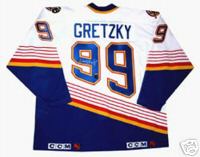 We are just one day away from the start of the 2006-07 NHL season and I've got six teams left to preview. Luckily, I've already gotten around to all the teams playing tomorrow, so I will be well within my rights to hold off on some previews until then. Technical issues not withstanding. Hopefully, my computer will cooperate long enough to let me get through them all. For the moment, let's check out the St. Louis Blues.
"I hate to see that evening sun go down,
'Cause my lovin' baby done left this town."
The opening lines of W.C. Handy's "St. Louis Blues" would probably be an apt description of the feelings most hockey fans have towards the team of the same name. (Unless they aren't Blues fans, in which case they probably don't care, but the sentence sounds more poetic as is so I'm putting this part of it in parentheses after the fact.) This once
Brett Hull, Adam Oates, Curtis Joseph, Brendan Shanahan, Al MacInnis, Chris Pronger, Pavol Demitra, Pierre Turgeon, Roman Turek and Doug Weight. What do those names have in common? They've all gone on to accomplish big things wearing a sweater that didn't feature an unfortunate pairing of blue and red. You may recognize Pronger and Weight as two of the players who participated in the '06 Stanley Cup Finals (for the Oilers and Hurricanes, respectively). Brett Hull is most famous for the Goal That Never Was (not sure what I'm talking about. Go to Buffalo sometime. On the way back from Toronto I stopped at a rest stop outside Buffalo and there was still a newspaper clipping on the wall with a picture of Hull's skate in the crease. Six years after the fact.)
Don't let the quarter-century of playoff appearances fool you, this is a team that was mired in a two decade cycle of mediocrity, constantly falling in the first or second round of the playoffs. Even when they finished the year with the best record in the NHL in 2000 they managed to lose in the first round. Which is how they ended up where they are today.
Where is that, you ask? Rock bottom. After spending almost their entire history as a middling-to-above-average team, the bottom finally fell out after the 04-05 Lockout. The Blues finished the season with a league-worst record of 21-46-15. This year doesn't look too much better in terms of wins and losses, but the outlook isn't nearly as bleak. Goaltender turned broadcaster turned General Manager John Davidson acquired Bill Guerin and Manny Legace during the summer. Both of them, as well as prodigal son Doug Weight, are beyond their prime and won't contribute as much as they once would have, but they should provide vital veteran leadership for a young, rebuilding team. Think of the 2006-07 Blues as this year's version of the 2005-06 Washington Capitals, only without Alex Ovechkin. Or anything else to make watching their games a worthwhile endeavor.
To keep track of all the suffering of the coming year, check out Back In Blue. Or, if you happen to be an avid Blues fan looking to break through to the blogosphere, Blues Line might be the place to go.
Labels: NHL Previews, St. Louis Blues
posted by Kevin @ 10:48:00 AM
0 comments





